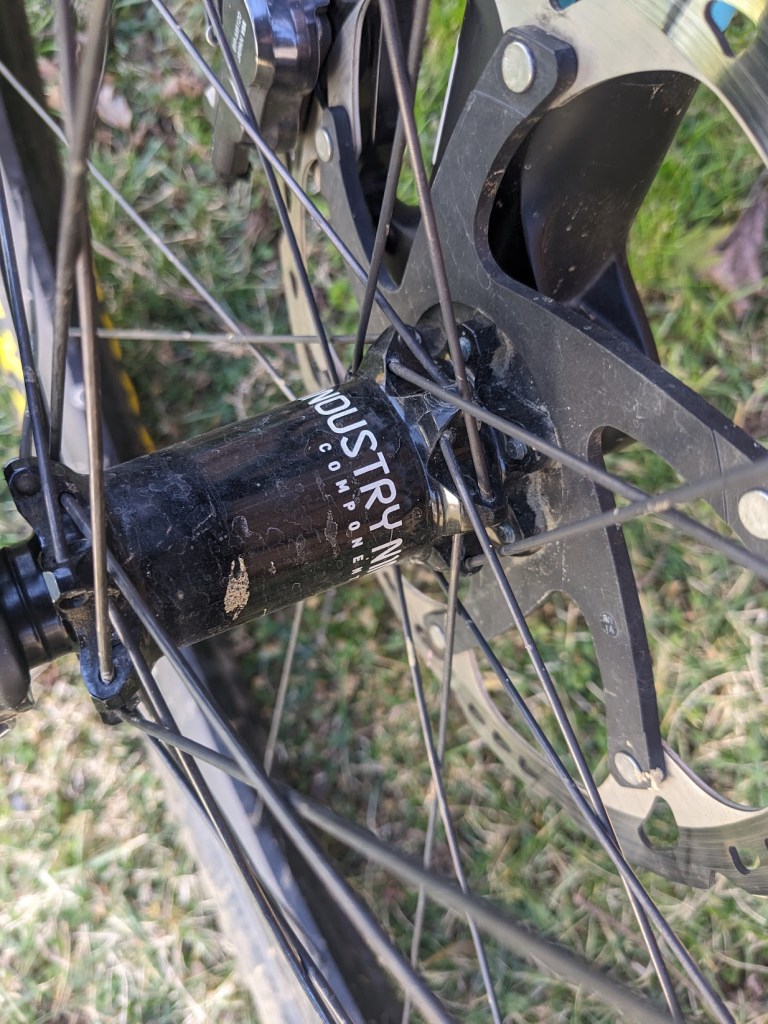
The summary of the update is that Industry 9 is addressing the durability concerns of the Hydra hubs which include cracked axles and premature bearing wear.
I welcome these changes as I have been one of the many riders who have experienced durability issues with Hydra Hubs. While, I haven’t experienced cracked axles or hub-shells, I have found that I’m replacing the hub bearings at least twice a year. Typically, the failure of a rear hub bearing results in an unnerving creak from the rear of the bike. These hubs have required more maintenance than any other hub system I’ve owned.
So, the question is: With this update would I purchase Industry Nine Wheels again?
No I wouldn’t.
I’ve been riding I9’s Hydra Enduro S wheels for about two years. These wheels have conventional j-bend spokes, instead of straight pull spokes. This means you can easily walk into any bike shop and have them replace a spoke without a special order. At $995 these wheels are definitely a great value for a premium feeling wheel set. They’re reasonably stiff and minus the issues with the hub bearings they’ve been very durable with minimal truing needed.
A debate I often have with myself is if I need this much hub engagement? It certainly feels premium, and I can see it being an advantage if you live some where with a lot of techy climbs. Here in Western North Carolina (where I9 wheels are made) we don’t have much of this flavor of climb; we’re often just climbing very steep gravel roads or trails.
The real bonus to this hubs is the noise they make. While some people prefer a quiet hub, I enjoy I9’s noise because it let’s hikers know I’m approaching and it’s loud enough to scare bears away. I view this more as a built in bear deterrent than anything.
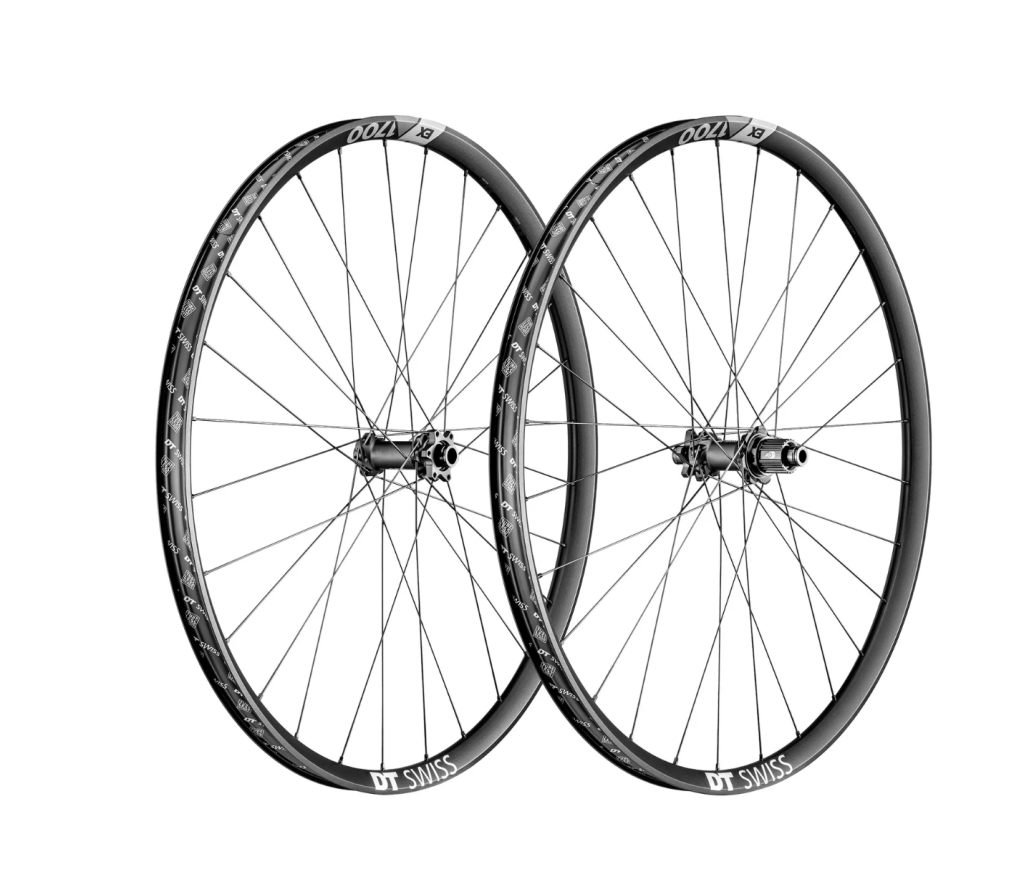
So what would I purchase instead? The answer is easy: DT Swiss Ex1700 Spline wheels.
These wheels, with the 350 hub and 36 ratchet provide a similar engagement to Hydra hubs, but need far less maintenance. Sure they are about $100 more at $1,102 and 100 grams heavier, but less down time is always a plus for me. You’re easily going to spend that extra $100 in bearings and service in a year. They don’t come in any wild colors, but I value durability over customization. It’s also a bonus that these have a centerlock rotor option.
I’ll probably keep running these wheels until I inevitably break the rims. It’s been great supporting a local company, but I’d rather have something that works all the time.
I apologize for talking about pedals ad nauseam. I’ve had bike pedals on the brain after spending some time riding flat pedals.
I had been an exclusively clipless pedal rider up until recently, when I spent a year plus riding only flat pedals. It’s an experience I’ll write about soon. What I enjoyed most about flats was the feeling of a large stable platform underfoot. Combined with a flexible skate style sneaker the amount of feedback I got from the bike and terrain was unparalleled. I had a greater sensation of what my suspension was doing as well of the traction of my tires. Of course the trade of flat pedals is your feet tend to shift around the pedal especially on rough descents. If you charge too hard into something your feet can be blown off the pedal entirely.
Ultimately, I prefer clipless pedals because my foot stays in the same position the entire ride. Over the course of a long ride constantly readjusting your foot can become fatiguing. I also like being able to charge recklessly into rock gardens without thinking about my foot position.
Besides a few stints on Crank Brothers pedals, ended by premature failure of the pedals, I have always used Shimano SPD pedals. They’re just so dang reliable. I have sets that are close to ten years old, that still function perfectly. However, when coming back to SPD’s after riding flats, I noticed some of their flaws which I discussed in the OneUP pedal review.
In short, there’s a sort of “looseness” to Shimano pedals. Despite a very defined “click” that tells you when you’ve entered and released the pedals, there’s a bit of free play between the binding and the cleat. It’s not a rock solid feeling. In addition to this, despite the platform size of the Saint Pedals, very little of your shoe actually touches the pedal and the pins don’t make contact with your shoes.
I was really excited for the OneUp pedals, I thought they had solved the issues of SPD pedals and created an SPD style pedal that felt more like a flat. That was of course before I released that the pedals would not release in the mud. I’ve been back and forth with OneUp and they state there’s a revision to the pedal on the way. I’ll test them again, but until then I’m riding the Shimano Saint PD-M821 pedals again.
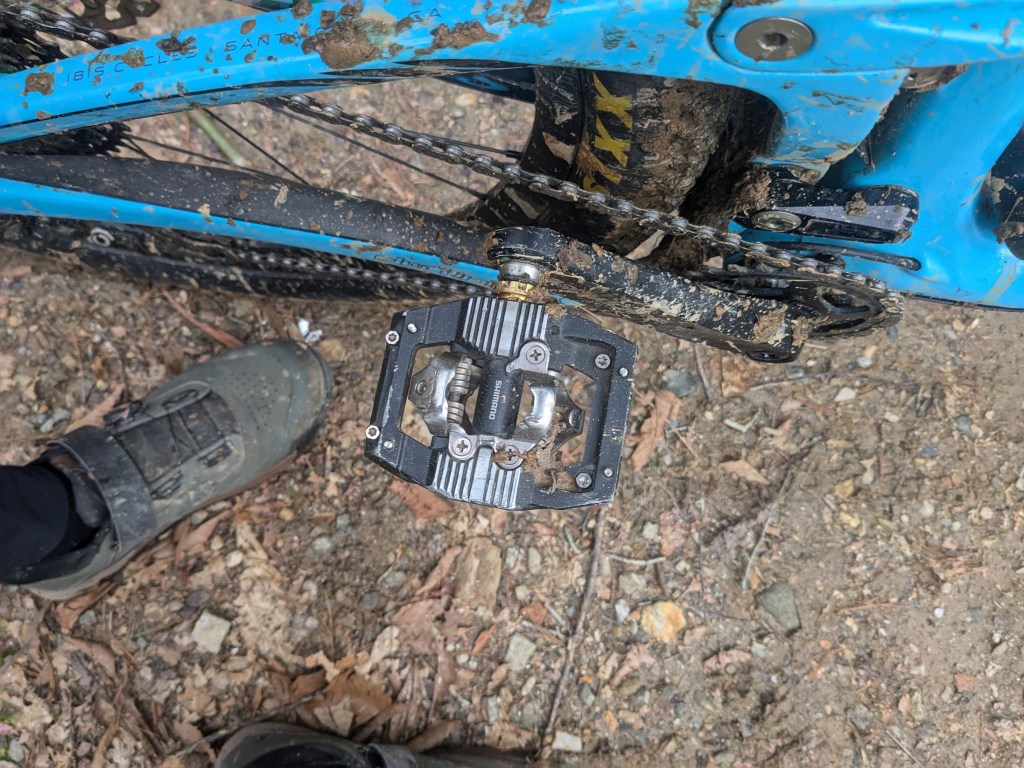
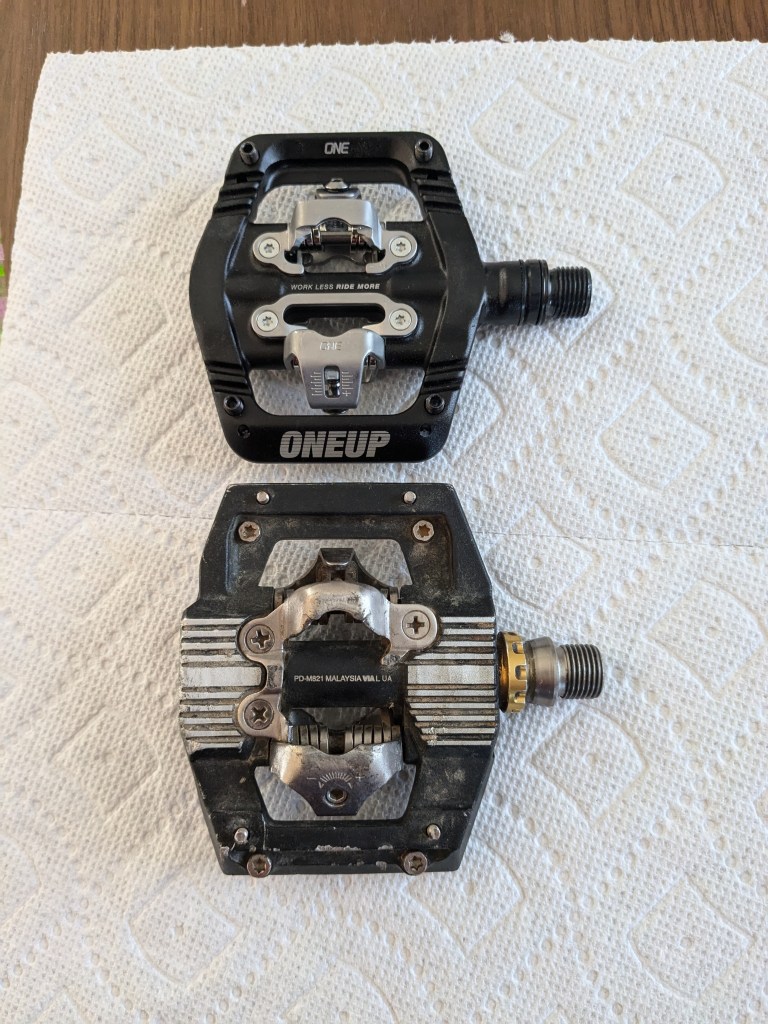
The Saint’s are a pedal I’ve used for a while. They are Shimano’s flag ship gravity pedal. They’re essentially a Shimano Trail pedal with a bigger platform and 4 pins on each size. I’ll be honest and say while these offer a bit more stability than the trail pedal, it’s not a lot and the pins are more there to provide traction while unclipped. At 546 grams, these pedals aren’t light, but I do think they’re the pedals to go with if you like SPDs and are gravity focused.
So, after riding the rock solid OneUp’s how bad are the SPDs.
The play in the pedal was definitely noticeable, but I don’t think it detracted from the experience. I notice it more while pedaling on rough sections of trail, such as a technical climb. When descending, I’m weighting the pedals more and it becomes less noticeable.
The release tension of these pedals is significantly less than the OneUp. While some riders complain that SPDs don’t go tight enough, I personally don’t want super tight pedals. However, after riding the OneUps, I did find myself adding a few more clicks of tension to the Saints.
There’s slightly less platform stability on Saint’s, but not enough that it mattered. Combined with a more flat-pedal style shoe, there’s plenty of platform to these pedals.
I rode on a very muddy day and did not encounter any issue with these pedals. I was impressed with just how predictable the entry and the exit was. This is something I’ve always loved about SPD pedals. I never worry that the pedals won’t release. On the other hand the OneUp’s were hard to get in and out of.
The OneUp’s had a more premium “locked-in” feel when you were clipped in, but overall is chasing a marginal gain really worth the expense of reliability and safety.
Finally when It comes to servicing SPD pedals, it’s incredibly easy. I’ll post a video below, but essentially when the pedals start to free spin, or develop axle play, you simply remove the axle from the pedal body and pack it with grease. If there’s a lot of play in the axle you will need a cone wrench and while finicky, the adjustment is straight forward. Like many people, you also can just completely forgo maintenance on these pedals. They may not feel the best, but they’ll continue to work.
Going back to the Saint’s has made me wonder if it’s hard to beat the original. I’ve yet to try all iterations of clipless pedals, but I’ve read plenty of reviews. It seems hard to beat the bomb proof reliability of Shimano pedals.
The only pedals I’m curious about now are Hope’s clipless range. I need to chill a bit on my budget, so perhaps I’ll try those in the distant future. Until then, I’m going to enjoy my Shimano’s and not think too hard about it.
On Monday (17, February) I wrote a brief update on my experiences with OneUp’s new clip pedal.
While, I’ve enjoyed this pedal, I found out the hard way that this pedal will not release in muddy conditions. I was riding at a bike park on Monday in muddy conditions and as is typical on a bike park day, I was stopping, checking out trail features and hiking back up the hill.
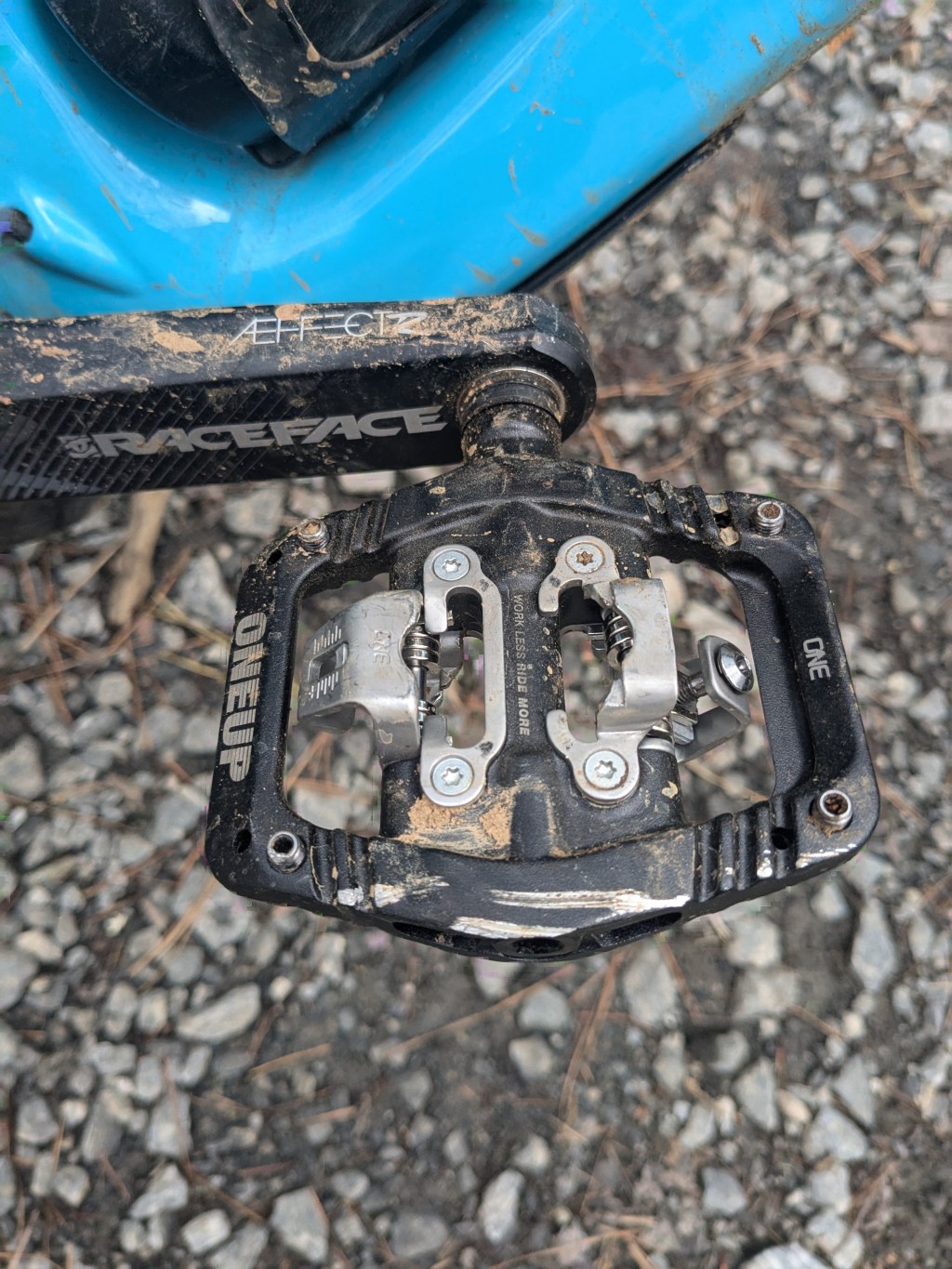
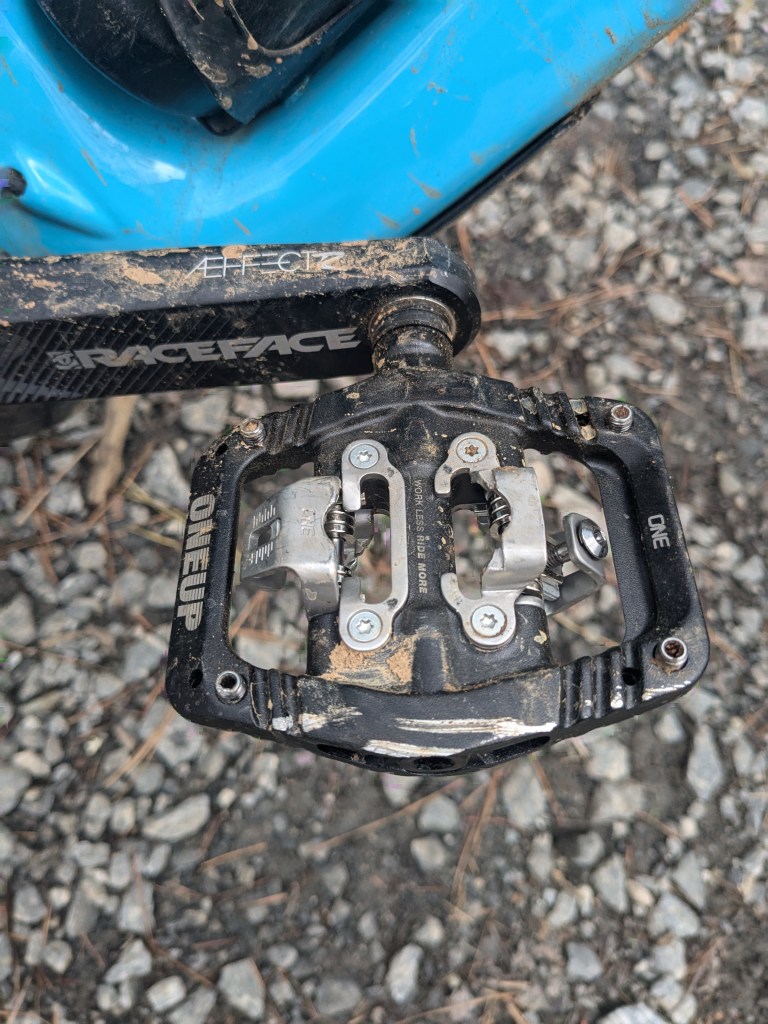
I found that when the pedals or cleats got covered in mud, or any type of dirt/grit, the pedal was extremely difficult to release. I fell over at least twice and found myself on the ground unable to unclip at slow speed.
It makes me cringe to think of how bad this could have been if I needed to suddenly unclip on a steep section of trail or crashed and had the pedals not release.
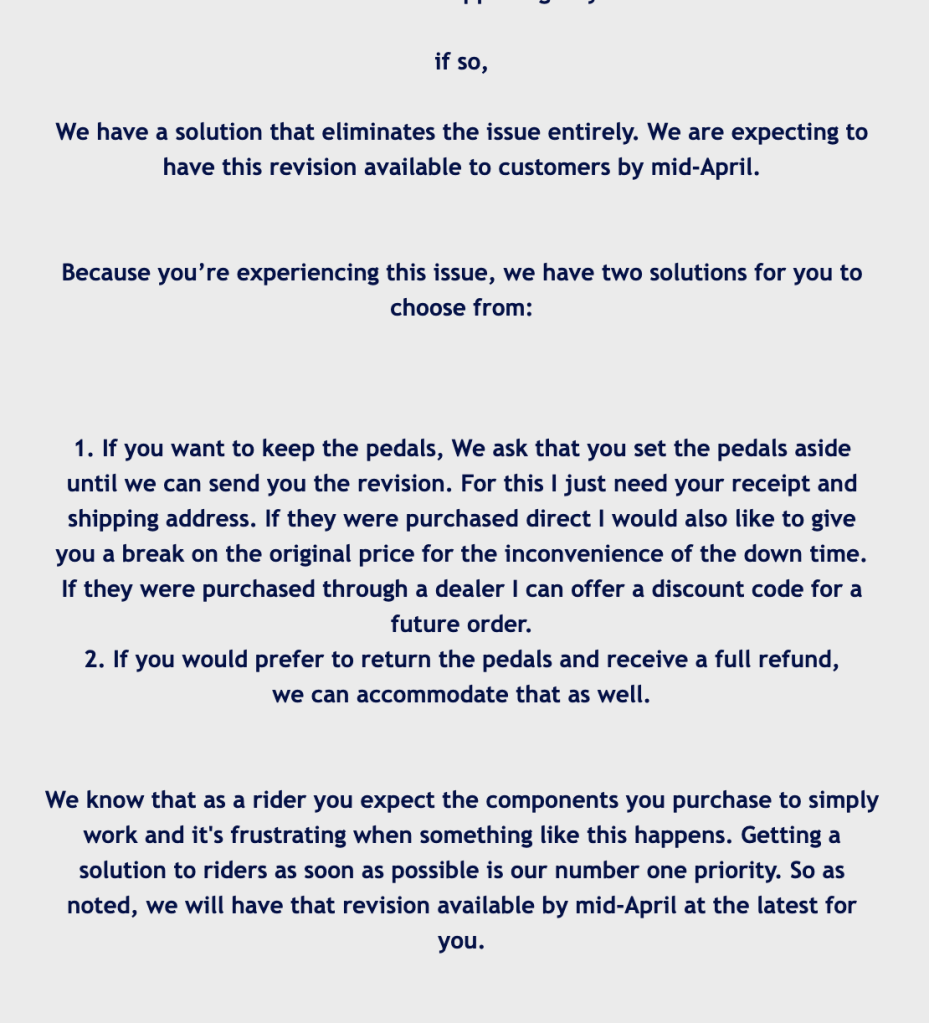
I was pretty miffed about the situation, but decided to sit on it for a bit. In a heat of frustation I wrote a 1 star review of the pedal to which OneUP responded. Here’s the response:
Firstly, I want to say thank you to OneUp for making this right. I look forward to whatever revision they come up with. I’m opting to keep the pedals, because I do believe they are a genuine improvement on the SPD system. OneUp makes quality parts and I have confidence that they will improve these pedals.
However, I do wish they worked from the start. I feel as though this issue could have been easily caught in testing. A clipless pedal that will not release is an egregious safety issue and I feel like people could become seriously injured.
Their response makes it seem like this is a known issue, or it was at least widely reported enough for OneUp to be aware of this.
I appreciate the legal challenges that come with owning a business, but I do feel they need to make customers aware of this issue. Especially if they are releasing a revision to the pedal. This should be made available to all customers, whether or not they have to contact OneUp for support.
We’ve seen similar “silent recalls” from the likes of Fox, where their X2 shock had durability issues. While it was not made widely known, many bike shops were telling their customers that if they put in a work order with Fox, they would offer a free replacement.
I wish bike companies would be willing to publicly say “We fucked up, we’re sorry, we’ll make it right.”
Furthermore, my experience with OneUp leads me to conclude that many bike companies moderate their reviews. There are no negative reviews on OneUP’s website, but they’re aware of issues with their products. I see similar trends with other brands. I don’t see the need hide negative feedback.
Anyway, I’ll conclude it here. I’ll report back when I receive the revision in April.
The so-called “spirit of gravel,” has escaped me for many years; I’ve never fully understood this whole gravel thing. People have been riding bikes on gravel roads since the bicycle was invented, but seemingly overnight in the 2010’s, the bike industry invented the gravel bike category. I was working in a bike shop in 2013 when just about every bike company added a gravel bike to their catalog.
The Niner RLT 9 , one of many debut gravel bikes to come out in 2014.
The gravel bike designation confused me, I thought, “What the hell is a gravel bike, can you only ride them on gravel?”
These bikes appeared to be road bikes with clearance for fat, knobby tires and disc brakes. Similar to cyclocross bikes, which had existed for decades, only with more mounts for water and whatever junk you wanted to strap to your bike. I was living in Boston at the time and I had no idea where the nearest gravel road was and the idea that I had to strap things to bike was foreign to me. You’re telling me there’s rides where a Dunkin’s or a 711 isn’t nearby?
As the gravel thing took I off, I was racing cyclocross and cross-country, as training I’d occasionally ride my cyclocross bike through combination of city streets and dirt paths through conversation land forests and town parks. It wasn’t like the pictures of gravel riding I saw on the internet of cyclists pedaling through endless gravel farm roads in the Midwest. It was more of MTB-LITE and If I’m honest I didn’t enjoy it very much. I felt like I had to baby my bike to avoid a flat tire or a broken spoke.
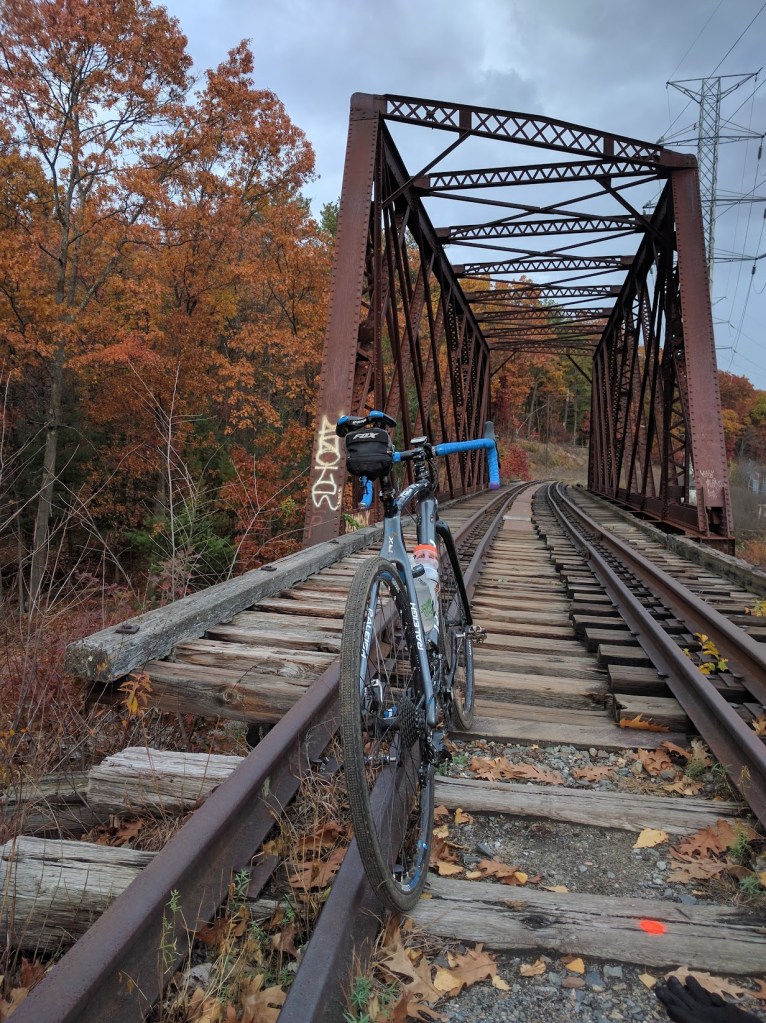
Autumn 2016 – Waltham, Mass. The old railway leading into Weston, before it was turned into a bike path.
The more I became interested in Mountain Biking, the less I enjoyed riding any kind of drop bar bike. Covid was the nail in the coffin for my enjoyment of riding drop bar bikes. With less traffic on the roads, and less enforcement, drivers started to see the road as their personal time trial course. You could drive as fast as you wanted without repercussions. Road cycling started feeling like a death wish as drivers buzzed me at high rates of speed every time I went out. While the Boston area has an excellent network of multi-use paths, during covid everyone wanted to go outside and these paths were more crammed than downtown streets during rush hour.
I started leaving the city more and spending time in Vermont and Western Massachusetts. While these areas have great gravel riding, I wasn’t driving 3+ hours to ride a bike on gravel; I was going mountain biking. It was during covid that my obsession with mountain biking took off. I started plotting on how to leave the city and ride mountain bikes year round.
Vermont was always such a relief from the city.
With my job going remote, I moved to Asheville, North Carolina due to its temperate weather and it’s proximity to the expansive Pisgah National forest. Unfortunately in the first few months of living here, I crashed on my mountain bike and bruised my knee. I was unable to ride for about two months as I healed. A physical therapist recommended I ease back into it with some road riding to strengthen my knee. The problem was I didn’t own a road bike any longer. The cyclocross bike I had been riding for nearly a decade was clapped out and I decided to sell it in anticipation of the move.
2022-23 was a great time to buy a bike as many bike companies thought the covid bike boom would last forever and had too much inventory on hand. Specialized in particular were selling their bikes at deep discounts. In January, 2023 I bought a Specialized Diverge on sale; my first ever “gravel-specific” bike and to my surprise I fell in love with gravel riding.
Gravel bikes and components have come a long way in the last ten years. I continue to be throughly impressed with my “entry-level” alloy Diverge. It’s slack geometry, low bottom bracket, long wheel base and engineered frame-flex, make the bike extremely comfortable yet confidence inspiring on rough train and sweeping mountain descents.
My previous cyclocross bike had cable actuated disc brakes, that only sort-of worked. By comparison the hydraulic GRX on my new bike give me the same confidence of the brakes on my mountain bike. Gravel tubeless tires and wheels were questionable back in the day, but I’m happy to report the reliability and performance of gravel tubeless in 2025 is amazing. Most gravel bikes these days can fit at least a 700×45 tire in the frame giving you loads of options. I’ve opted for a 44c Renee Hearse slick tire which rides nearly as fast as a road tire, but with added cushion and grip for gravel roads.
While I enjoy living in Asheville, I will be the first to admit that it’s not terribly bike or pedestrian friendly. I was scared to ride a road bike in the city for the first few months of living here, but I started attending group rides hosted by Gravelo, a bike shop in North Asheville specializing in high-end gravel bikes. Gravelo’s rides showed me you can easily find yourself on quiet mountain roads just outside of downtown Asheville, several of which are gravel.
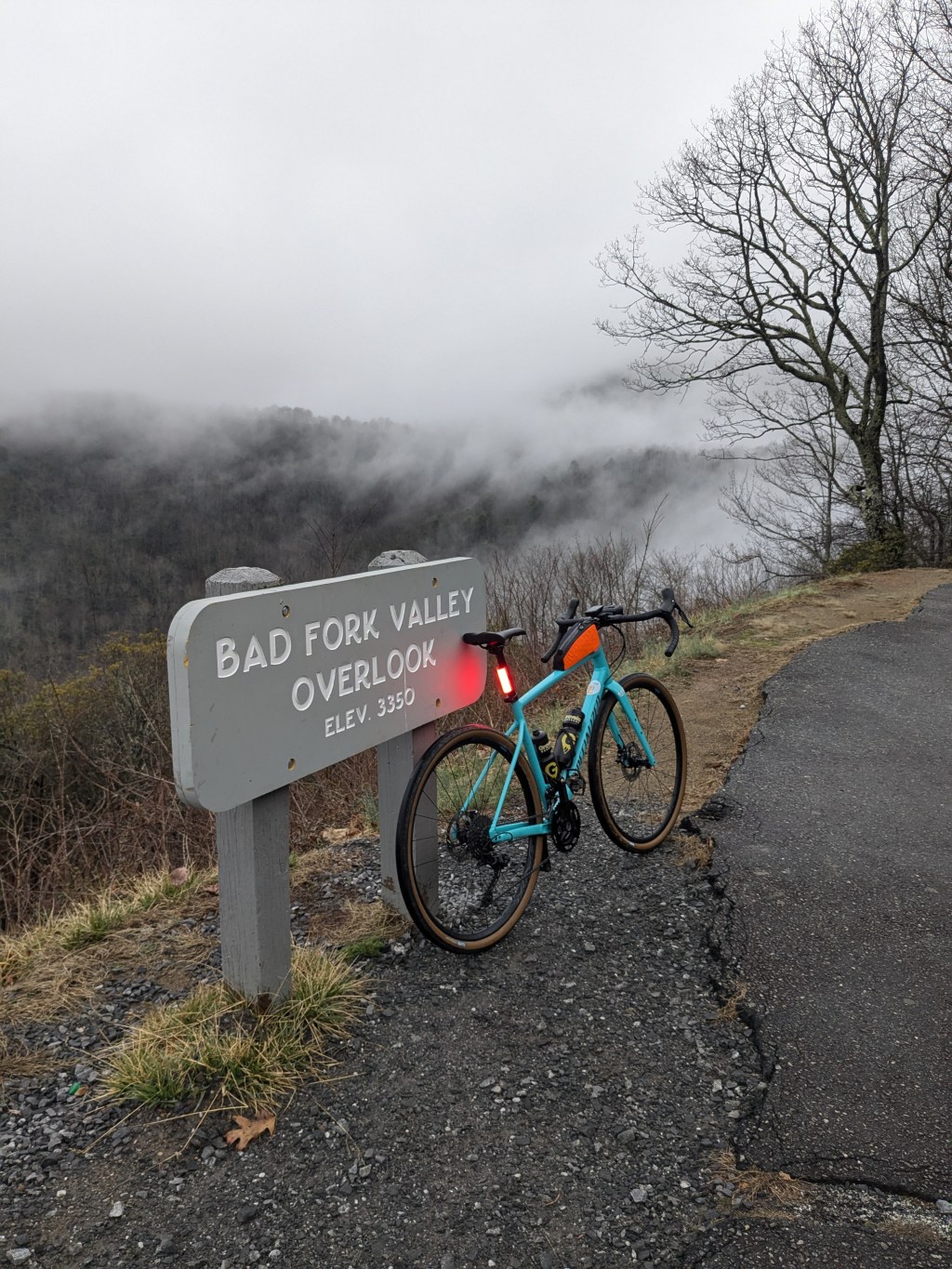
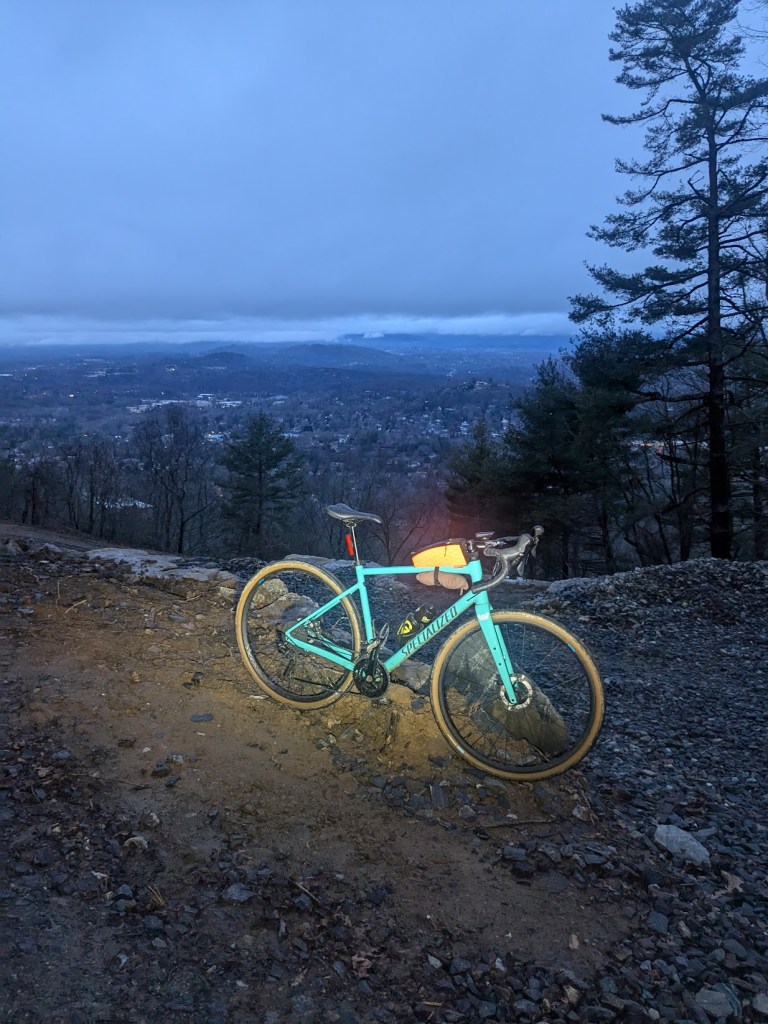
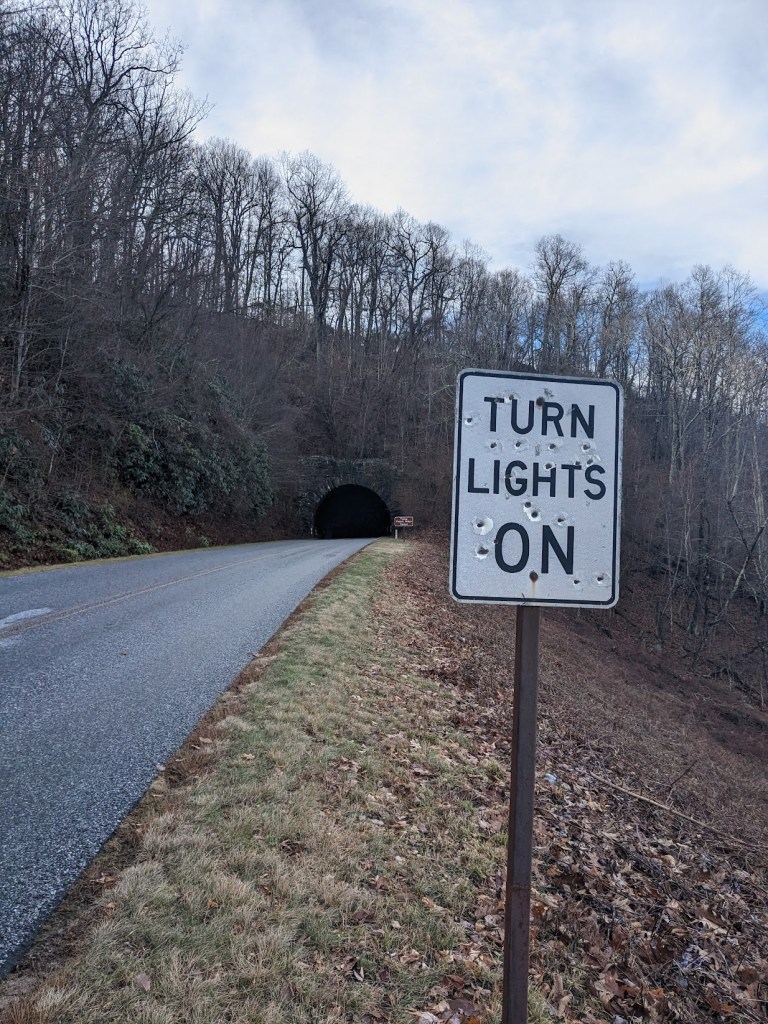
The discovery of gravel roads in town, opened up new options for me and meant I didn’t have to drive my mountain bike to a trailhead. I could leave my front door and explore the city. Exploration, studying maps and having a good time is the spirit of gravel to me. There’s something exciting about riding gravel bikes in the mountains. While the steep mountains of Appalachia can be an excruciating physical challenge, the high speed descents on roads that look like spaghetti on a map, more than make up for it. There are plenty of sprawling gravel roads in the nearby Pisgah National Forest and with sections of the Blue Ridge Parkway closing to motorists in winter, Western North Carolina is an amazing place to have an adventure on a bike.
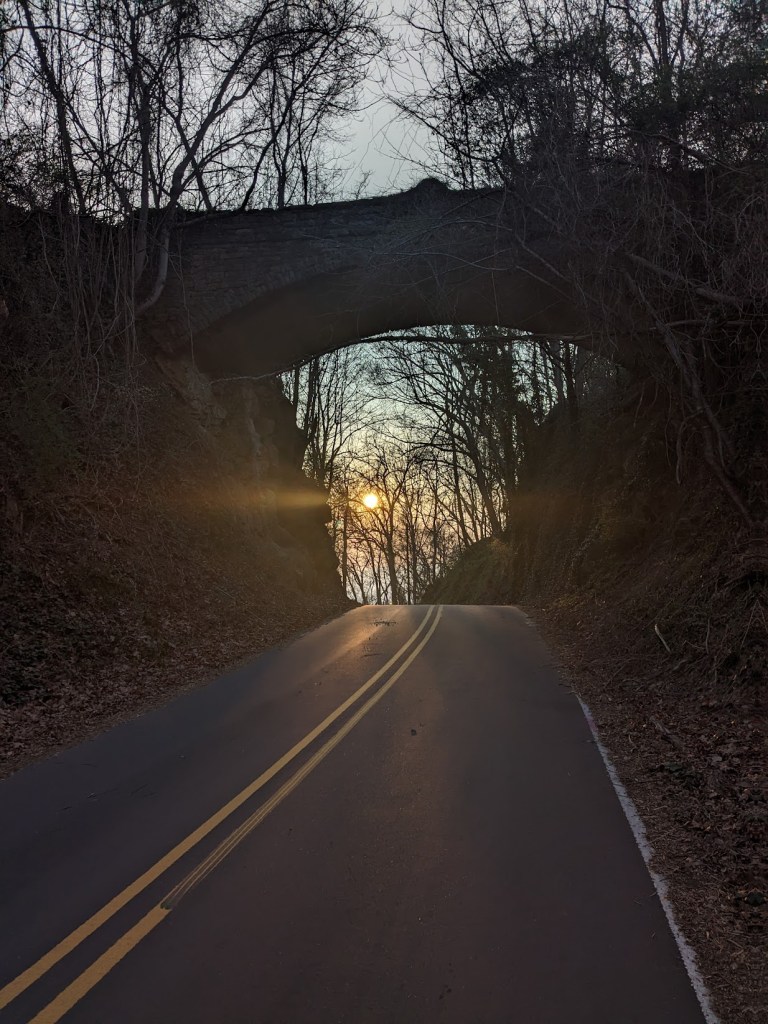
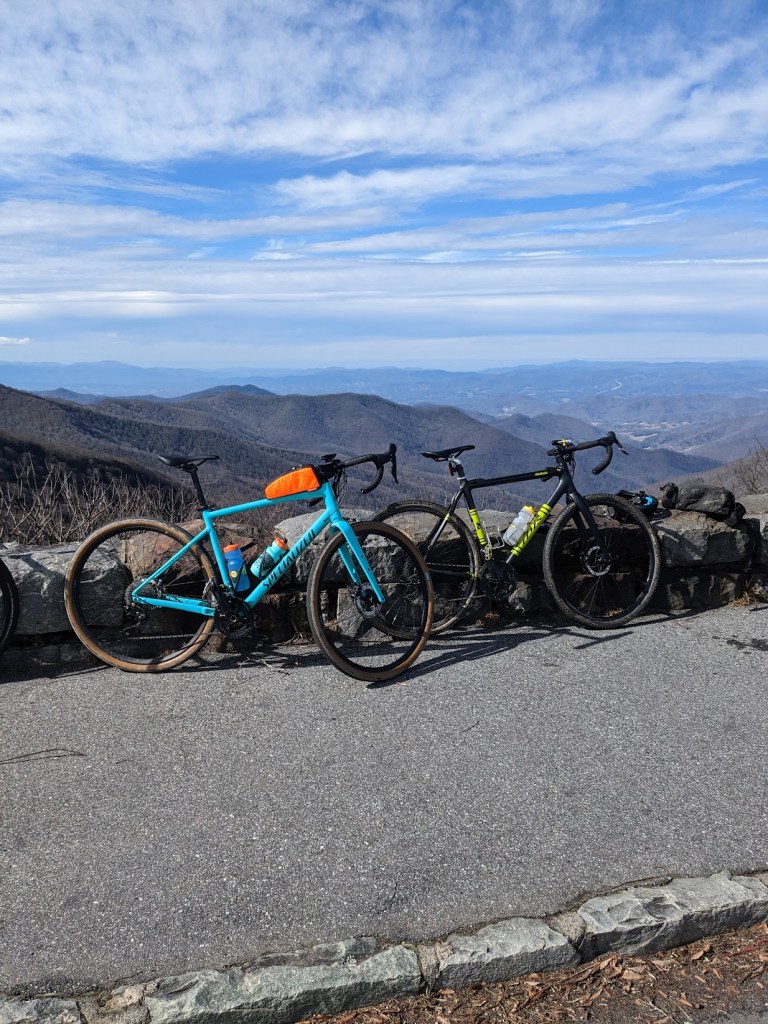
I’ll include this post with some of my favorite photo’s from local rides!
I recently gave OneUp’s Clip Pedal’s a positive review, but told y’all I’d update you if anything changed.
Unfortunately, I did not test these pedals in the mud. I have found that these pedals will not release if any kind of grit accumulates on the pedal’s binding or cleat.
I rode today at Ride Rock Creek a shuttle-access downhill park in Zirconia, North Carolina. Conditions were typical Southeastern freeze thaw. The soil at the park is a mixture of clay and sandy loam. In my previous tests of these pedals, I tested them on trails I know well and thus didn’t get off my bike much. At the bike park you spend more time walking, whether it’s waiting in the shuttle line, or scoping out trail features. My cleats must have picked up some of this mud and when my friends stopped at trail intersections I found myself unable to unclip and fell over. This happened not once, but twice. While on the ground I attempted to unclip and found it very difficult. I sat there for a few moments like a turtle on it’s back. This ruined my confidence in this pedal, knowing that I might not be able to unclip in an emergency.
While this type of mud is thick and turns to a concrete-like substance when dry, I’ve used Shimano SPD pedals for over 15 years and never had this happen. I’ve raced cyclocross and XC in horrid conditions and have never had this issue. With SPD pedals, you typically can’t clip with muddy cleats, but you can get out of the pedals without issue.
If I had to guess, I would say the tight tolerance of these pedals does not allow for any kind of foreign material. Unfortunately, this makes these pedals unrideable to me and will be going back to Shimano Saint’s for the time being. As an experiment I will try to recreate these conditions with the OneUp pedals and Shimano SH51 cleats. I have been using the OneUP cleats. Again, I’ll report back, but I’m bummed out to report this
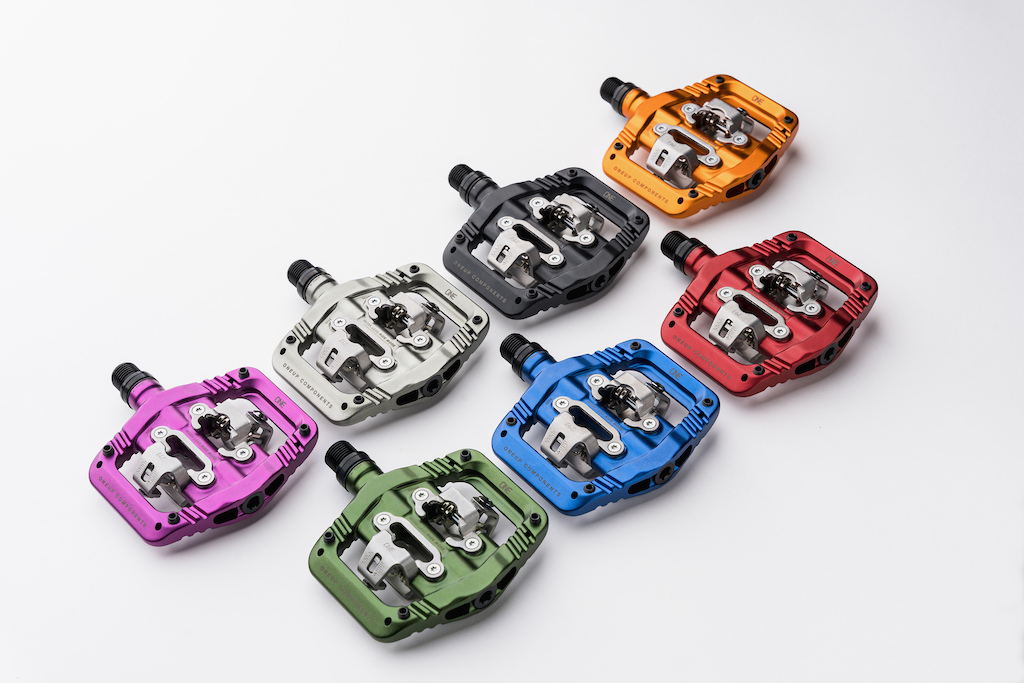
On January 14th, Oneup Components released their first clipless pedal; simply called “Clip Pedals.” At first glance it would be easy to mistake these pedals for SPD knockoffs that come in pretty anodized colors. However, there are key differences between Shimano and OneUp pedals. Below are the Clip Pedal’s unique features.
Platform Size, Weight and Price
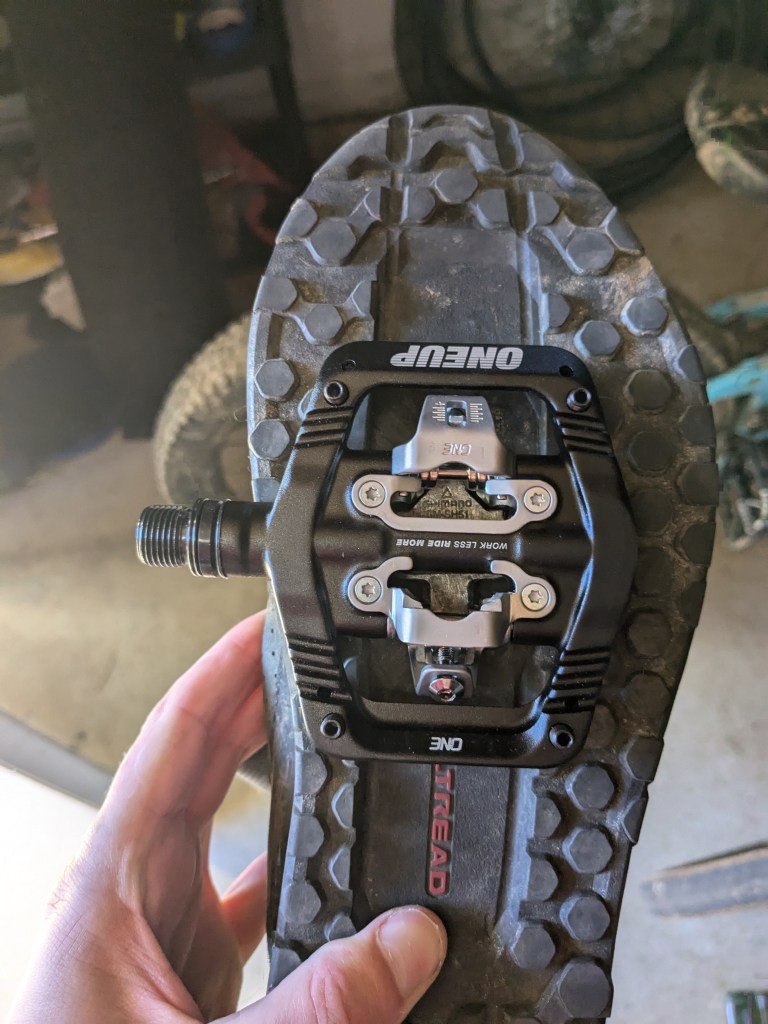
OneUp’s clip pedal’s platform size is roughly the same size as Shimano’s Saint pedals, but the pedal body is much thinner. OneUp claims that these are the thinnest clip pedals on the market, this should slightly reduce stack height and prevent rock strikes.
The OneUp pedals are much lighter than Saints; tipping the scales at just 410 grams, a whole 130 grams lighter than the Saints. The OneUp pedals are very close in weight to featherweight 400 gram XTR Enduro pedal, which is remarkable considering the OneUps platform is much larger.
The OneUps are priced competitively at $159.99; on par with the $160 Shimano Saints.
OneUp’s Party Trick: Tight Cleat Fit and Longer Pins
While OneUp’s Clip Pedal is much lighter than many Shimano offerings, their major difference is a tighter cleat fit. SPD pedals tend to have a bit of play between the binding and cleat; your shoe can rock up and down on the pedal ever so slightly. OneUp’s pedals have virtually no play in the system. In addition to this tighter cleat to binding interface, OneUp uses a spring with higher tension which results in a significantly higher release tension than SPD pedals. OneUp accomplishes this while retaining the same 5 degrees of float that SPD pedals have and a similar 12 degree release angle (SPD is 13 degrees) OneUp supplies their own SPD comptabitle cleats, but it should be noted that Clip Peda are compatible with Shimano SH-51 cleats.
The pins on OneUp’s pedals are much longer and thicker than the pins found on Saints. I ride with Shimano GE900 shoes and the pins on the Saint’s never contacted my shoes. After riding the Saint’s I can see some evidence of contact in the form of indentation on the soles of my shoes. Only the rear pins make contact, however. The pins unfortunately are not adjustable and are designed to bottom out in their threads. The pins can be removed from either end of the pedal, making it easy to replace damaged pins. OneUp includes cleat spacers to prevent release interference created by pin contact on thick soled shoes.
Serviceability
OneUp pedals are designed to be fully user serviceable. Not only can you replace the axle bearings and bushings you’re able to replace other small parts on the pedal as well. It appears only the bearing service kits are available on OneUps website right now. Perhaps later, other service parts will become available.
The rebuild procedure is a bit more involved than Shimano’s simple grease flush process and involves replacing cartridge bearings, bushings, an Igus bearing and seals. However, it doesn’t look difficult even for someone as mechanically inept as me.
Build Quality
The clip pedals look and feel premium. While Shimano pedals are prone to free spinning and bearing play, OneUp’s clip pedals have a tight bearing seal and have no play. We’ll see how they wear it though.
What’s In The Box?
For your hard earned $160 you get a pair of pedals, OneUp’s SPD compatible cleats, cleat spacers and a pedal bushing tool to help you with servicing your pedals. I think the inclusion of the tool is just nifty, as some Shimano pedals require a proprietary tool that you have to purchase separately.
Ride Impressions
Finally, let’s talk about how these pedals feel on the trail. I only have 4 rides on these pedals, but that’s enough to give me a sense of how they feel. In several month’s I’ll report back on their durability.
The Testing grounds
I rode these pedals somewhere on a variety of trails in Pisgah National Forest. I tried to include as much technical climbing as possible to test the pedals ease of release when I inevitably made a mistake. I also included some classic high-speed Pisgah chunk as well as some “locals-only” loamers. I felt this was a good representation of riding in Western North Carolina and mountain biking generally. Perhaps missing from the test loop were the technical rocky climbs you find in the deserts of the West and New England.
Pros:
Instant Familiarity
If you already use Shimano SPD pedals, then you’re going to feel at home on OneUp’s clip pedals. They’re compatible with SPD cleats, so if you’ve got a pair of shoes you can mount these to your cranks and go out for a ride with minimal set-up.
I installed the included OneUP cleats based on OneUp’ recommendation, however these can also be used with Shimano SH51 cleats. OneUp cannot confirm compatibility with multi-release cleats or other brands of SPD compatible cleats.
Tight Cleat Fit + Functional Pins = A More Stable Feeling Pedal
The platform of OneUp’s Clip Pedal provides plenty of stability, however it’s roughly the same size as Shimano’s Saint pedals. The real improvement in these pedals lies in its tighter cleat fit.
Recently I’ve been spending time riding flat pedals, and when I came back to SPD pedals. I noticed how much play was in the binding. On rough trails I could feel the cleat rattling against the binding mechanism. The float had a “skating on ice feel” as my foot freely rotated on the pedal. It was unnerving after spending time on flat pedals with tall pins that allow for no lateral movement.
The OneUp pedals feature a significantly tighter cleat fit than SPD pedals and feel LOCKED-IN. There’s no play in the pedal and the float feels more natural. Perhaps it’s a function of the sole and pedal pin interface, but OneUp’s Clip Pedals feel like they have less float. I tried to take notice of this. When I found myself spinning up a fire road climb I could feel the pedal float, but when I weighted the pedals while descending I felt very little movement. All I can surmise is that when weighted the pedal pins dug into the soles of my shoes and prevented them from moving. This provided a very confidence inspiring feel on steep and rough descents.
These pedals have damn near the stability of a flat pedals with the added security of clipless pedals.
Cons:
High Release Tension and a tighter cleat fit
What makes these pedals so good is may also be a negative. The higher release tension means it can be harder to clip-in and out of these pedals.
Many riders found SPD pedals to not offer enough release tension, leading to accidental releases. Personally, I was always able to find a setting that suited me within SPDs range of adjustability.
OneUP’s pedals ship with 3 clicks of spring tension, which in my opinion is very tight and they’ll go even tighter. After some experimentation I found that I prefer these pedals on their lowest setting. The lowest setting on OneUp’s pedals is about 3-4 clicks of increased tension on an SPD pedal.
As a result of increased spring tension it can be slightly harder to find the entry point of the binding mechanism and you have to be more deliberate while unclipping. The entry/release action iisn’t as smooth as Shimano, but I purposely rode some awkward trails that required me to unclip unexpectedly and I was able to get out of the pedal seamlessly each time.
An early review of these pedals on nsmb.com (https://nsmb.com/articles/oneup-clip-pedal/) gave me some pause when purchasing these pedals. The author stated that sometimes his left pedal would not release leading to some slow speed falls. He went through the effort of testing different cleats and found that this only happened with OneUP’s cleats and Shimano’s cleats did not have any issue unclipping.
I never experienced being unable to release my cleat from the pedals, but at the higher tension settings I did feel a bit of a hang. You could hear the spring mechanism release, but when I tried to take my foot off the pedal it felt like the cleat was getting caught on the pedal somewhere. When I reduced the tension of the pedals, this has gone away, but as stated above the release is still not as smooth as Shimano’s. This, so far as not resulted in me crashing, even in scenarios that required me to abruptly unclip. If this continues to be a problem, I’ll change to Shimano cleats and report back. I don’t see this as being an issue, but it’s worth mentioning because others have mentioned a similar issue in reviews.
Anodization Scuffs Easily
This really does’t bother me, but if you bought these pedals in pretty colors it might. Despite having a thinner pedal body, rock strikes are inevitable. After a few rock strikes the ano on my pedal has worn away exposing bare aluminum. I think these pedals will look quite rough after some time, but if they remain functional, I will be happy.
Overall Review
Time will tell how durable these pedals are, but overall, some subtle design tweaks in the SPD system have resulted in a pedal that feels much more stable and secure than Shimano SPD pedals. While the entry and engagement of the pedal may not be as smooth as Shimano, the trade-off of a solid feeling pedal is well worth it. Though these pedals are aimed more towards gravity riding, their low weight and reasonable price point should attract a variety of riders. aI really enjoy riding these pedals and if they prove to be as durable as Shimano Pedals, they may become my favorite clipless, coughs, ahem, clip pedal.














 The Descent